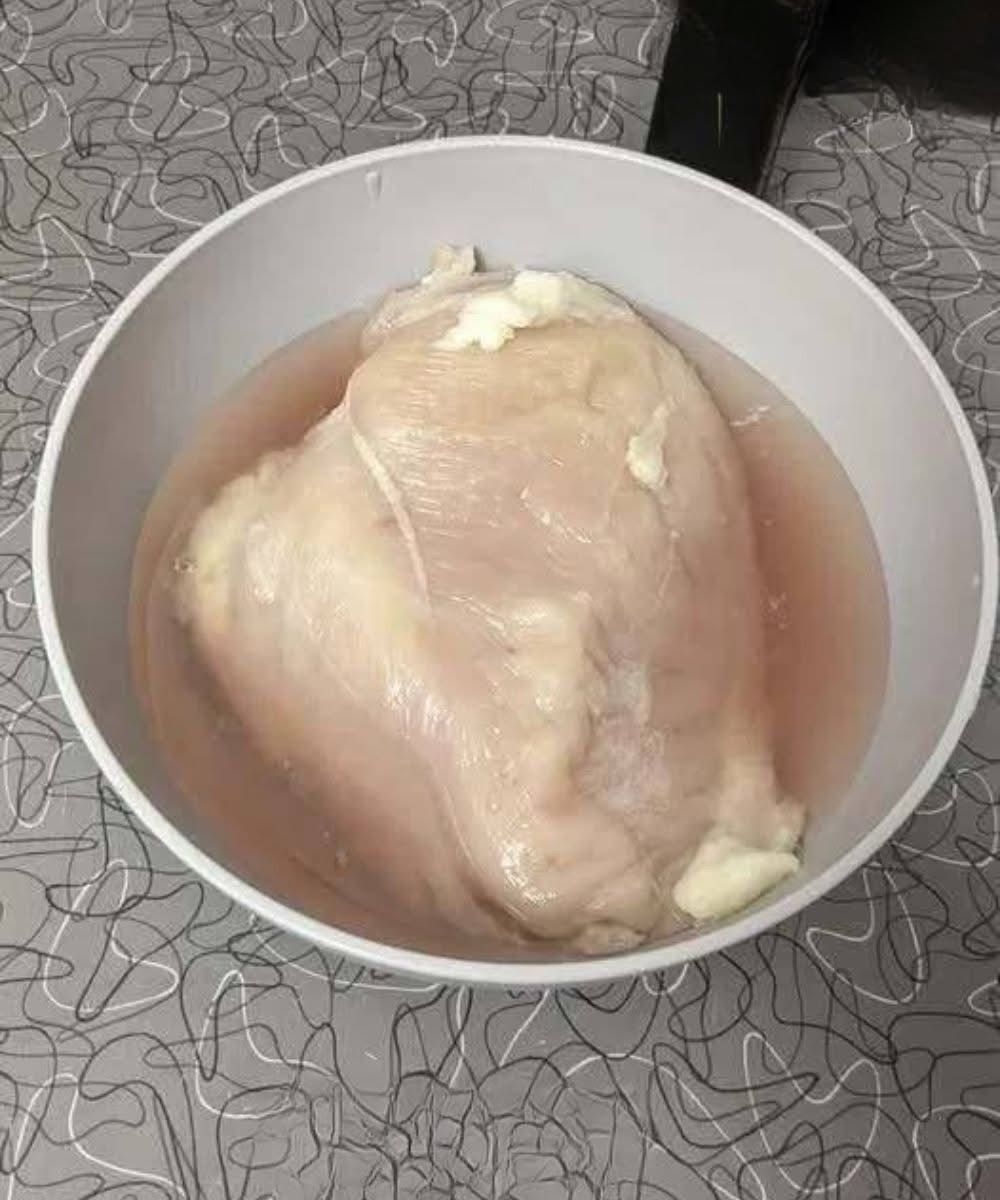
Food safety is one of those everyday concerns that often feels intuitive but can carry serious consequences if misunderstood. The question of whether it is safe to eat chicken that has been left out overnight on the counter may seem simple on the surface, yet it opens the door to a deeper discussion about bacteria, risk perception, family health, and the way people make decisions about food. In many households, situations like this spark debate—one person may rely on past experiences and say “it’s probably fine,” while another may feel uneasy and seek clearer guidance. When children are involved, the stakes feel even higher. Understanding the science behind food safety, rather than relying on guesswork or anecdotal evidence, is essential to making informed and responsible choices.
To begin with, it is important to understand what happens to cooked chicken once it is left at room temperature. Chicken, like many protein-rich foods, provides an ideal environment for bacteria to grow. When food is cooked, most harmful bacteria are killed, but this does not mean the food is permanently safe. Once the chicken begins to cool and sits out, it enters what food safety experts refer to as the “danger zone,” typically between 40°F (4°C) and 140°F (60°C). Within this temperature range, bacteria can multiply rapidly—sometimes doubling in number every 20 minutes. Leaving chicken out overnight, which usually means several hours well beyond the recommended safe window, allows bacteria to grow to potentially dangerous levels.
The common guideline provided by food safety authorities is that perishable food should not be left out at room temperature for more than two hours. If the room is particularly warm, that window shrinks to just one hour. Overnight exposure far exceeds these limits. Even if the chicken looks and smells normal the next day, it may still harbor harmful bacteria that are not detectable through the senses. This is one of the most misleading aspects of food safety—people often trust their senses, but bacteria such as Salmonella, Staphylococcus aureus, and Clostridium perfringens do not always produce noticeable changes in smell, taste, or appearance.
One of the reasons people may feel confident eating food left out overnight is that they have done so before without getting sick. This creates a false sense of security. Foodborne illness is not guaranteed every time unsafe food is consumed; rather, it is a matter of probability. The level of bacterial contamination, the type of bacteria present, and the individual’s immune system all play a role. An adult with a strong immune system may eat contaminated chicken and experience no symptoms or only mild discomfort, while a child, elderly person, or someone with a weakened immune system may become seriously ill from the same food.
When considering whether to serve such chicken to children, the risk becomes even more significant. Children are more vulnerable to foodborne illnesses because their immune systems are still developing. What might be a minor issue for an adult could lead to severe symptoms in a child, including vomiting, diarrhea, dehydration, and in some cases, hospitalization. This makes it especially important to err on the side of caution when making food safety decisions for a family.
Another important aspect to consider is the type of bacteria that can grow on improperly stored chicken. Some bacteria produce toxins as they multiply. These toxins can remain in the food even if it is reheated thoroughly. This means that simply reheating the chicken the next day does not necessarily make it safe. While heat can kill many bacteria, it does not always neutralize the toxins they have already produced. This is a critical point that many people overlook when deciding whether to salvage food that has been left out.